
You’ve been told your home needs foundation repairs, and you’re seriously considering using drilled piers for said foundation repair. Now your mind keeps drifting to the smaller stuff . . . the yard, the cracks, the doors, and whether your home will look the way you’re picturing when it’s all said and done.
What’s actually going to be different around your home once the crew packs up and drives off?

That’s a smart thing to sort out before anyone picks up a shovel.
At Anchor Foundation Repair, we’ve been fixin’ Brazos Valley foundations since 1985. Properly designed and installed drilled pier systems are what we do best, but we’ve also seen the little surprises that catch homeowners off guard when nobody warned them.
In this article, we’ll walk through the more minor issues that can seem off in a homeowner’s eyes with drilled pier foundation repair: what your yard and property may look like, what happens with cracks, how your doors and floors might change, and the everyday inconveniences that come with the job.
The bigger, more serious risks for ALL SLAB METHODS get their own article: 6 Things That Could Go Wrong with Slab Foundation Repairs. The goal isn’t to scare you off drilled piers or foundation repair in general. It’s to help you know what’s normal and when it makes sense to give your contractor a call.
What Will Your House and Property Look Like After Drilled Pier Repairs?
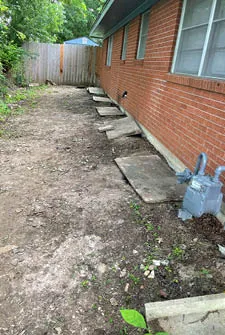
What will your home and yard look like once drilled pier repairs are done? Honestly, your yard will most likely be a little torn up for a while. Drilled pier foundation repair is a construction project happening on the outside of your home, and it shows. Just try to remember that all of this is temporary, fixable, and to be expected.
Holes Along the Outside of Your Home
To properly repair your foundation, we have to reach under the foundation beam. That’s the thicker, deeper edge running around the outside of a slab-on-grade foundation, and it’s the more structural part of the slab. The piers go underneath that beam to support it, so we’ve got to dig down to it first.
We dig those holes by hand with shovels, so there’s no heavy machinery chewing up your yard. The holes are still sizable (about 2 ft by 2 ft), though . . . they have to be, so the crew has room to drill and work under the beam.
The holes all get filled back in when we’re done, but some evidence will remain for a little while.
Concrete Patches From Breakouts
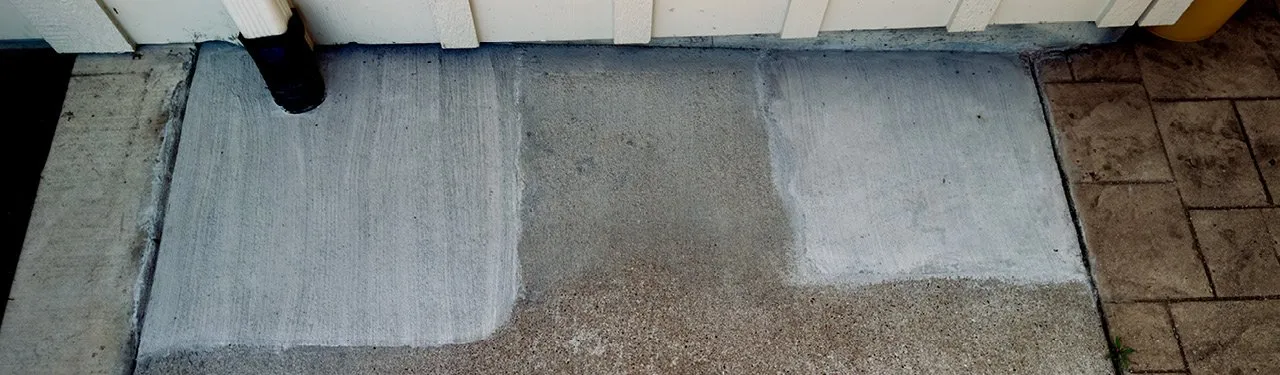
Sometimes a pier location sits under a sidewalk, porch, patio, or the edge of a driveway. When that happens, we do a concrete breakout, which means busting up a section of concrete to get down to the foundation beam. Once the pier work is done, that area gets patched with new concrete.

Expect to see those new concrete patches afterward, as they will be much darker at first. Fresh concrete won’t match the color and texture of older concrete, so the repaired spots will likely stand out for a while, but they do lighten up considerably as the concrete cures. Not exactly invisible, but solid and functional.
Landscaping, Plants, and Mulch
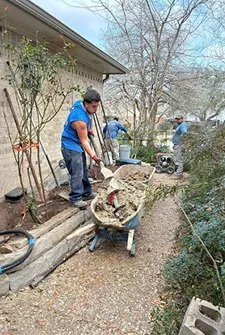
Flowerbeds tend to sit right up against the foundation, which is exactly where we need to dig. Plants near pier locations can get affected, and mulch, rocks, or edging may get moved around. If certain plants really matter to you, mention them before work starts. We dig deeper into this topic (pun intended) in Should Landscaping Concerns Hold You Back on Foundation Repairs?
We can temporarily relocate some plants and try to keep them alive during the repair, but it doesn’t always work.
Accidents Can Happen, But They’re Rare
Honesty Alert: We’re doing construction, and every so often, mistakes happen. Here at Anchor, we’ve broken a window or two over the years. We’ve also unintentionally cut an internet fiber line. Neither is a normal part of the process, and neither is our proudest moment 😬 but we’d rather you hear it from us.
One of the bigger concerns with any digging is hitting something serious, like a gas line. (Yes, we’ve accidentally done this too.) That’s why taking the right precautions before digging matters so much. Texas law requires contractors to contact 811 at least two business days before digging so underground utility lines get marked, and you can ask your contractor for the ticket number if you’d like the peace of mind.
Ok . . . enough with the rare stuff and back to the more typical issues.

We always do our best to put things back the way we found them (and repair any broken things that were our fault). There may be some minor inconveniences along the way, but the goal is to leave your property in good shape and as close as possible to how it was before we got there.
Will Foundation Repairs Cause New Cracks or Make Existing Cracks Worse?

Can foundation repair cause new cracks in your home?
Foundation repair can sometimes cause new wall cracks, depending on the type of repair. Whether cracks show up (or change) mostly comes down to one question: is your foundation being stabilized or lifted? Those two words come up a lot during estimates, so here’s what each one means:
- Stabilizing means holding your home where it is to help prevent further sinking, without raising it.
- Lifting means raising your foundation back toward its original elevation.
Stabilization Only
If your home is only being stabilized, you generally shouldn’t expect visible changes to your existing cracks – they won’t improve, but they should also not get worse. The piers support the foundation and help prevent further movement, but the home’s elevation isn’t changing. Your walls don’t have much reason to react.
Lifting the Foundation
If your foundation is being lifted, new cracks are possible as the home adjusts to the change in elevation. Rigid materials like drywall, tile, and brick mortar don’t bend well, so when the house moves underneath them (even in the right direction), they sometimes crack to release that stress.
More on this issue in Drywall After Foundation Repair: What to Expect and How to Handle It.

What About the Cracks You Already Have?
Making existing cracks worse isn’t typically what we see. In many cases, existing cracks actually improve as the foundation is lifted, because the two sides of the crack get pulled back closer together. Keep in mind that closing up isn’t the same as disappearing, since foundation repair doesn’t erase cracks.
The one exception is a crack that was patched before we got there. If a crack was caulked, spackled, or painted over and we didn’t know about it, that patch may start cracking again as the home moves back up during the repair.
The patch is reacting to the movement and will get stressed, it’s not signaling a brand-new problem. If you’ve patched cracks in the past, point them out to your estimator up front.

We can’t guarantee that no new cracks will appear during foundation repair. What we can do is tell you what’s possible before we get started, so nothing catches you off guard.
If cracks bother you, hold off on drywall repairs and fresh paint for several months so you only have to fix those things once.
Can Drilled Pier Repairs Change How Your Doors and Floors Feel and Work?
Will my doors and floors feel different after foundation repair?
Your doors and floors can feel different after foundation repair, and the goal is for that change to make things better.
Doors
Improving your home’s functionality is one of the primary goals of foundation repair, especially when it comes to doors. If a door in the repair area is sticking, rubbing, or won’t latch, our aim is to get that door working properly.

During the lift, a door might temporarily get harder to open or close as things shift. That’s part of the process. If a door was working fine before we started, we want it working fine when we leave. If a door wasn’t working well before repairs, our focus will be on improving its functionality as much as possible.
Floors
If your floors are sloping and the plan is to lift the foundation, the intent is to correct some of that slope. You may notice your floors feel different afterward, and that difference should be an improvement.

Notice we said “some” of that slope. Foundation repair aims to return your home toward its original elevation, not make it perfectly level, which we explain in Will My Home Be Level After Foundation Repairs Are Completed?
P.S. Your floors/slab may not have been 100% level when it was built. Definitely read the article above ☝️ if this is something you want to better understand.
When Lifting Isn’t the Right Call

Sometimes lifting a foundation is likely to create more problems than it solves, like when a recent remodel or an addition is tied into the settled area. When that happens, we may need to reconsider the repair approach and stabilize the home instead.
Sometimes a home *tells us* that lifting is done, even if it hasn’t been raised all the way. This is usually because framing or other materials have been warped and don’t want to return to their original position. We might stop short of a full lift if more damage begins to occur due to warping.
That situation is not common. It’s come up a handful of times, and it’s one of the reasons we trust our crew’s experience and judgment on the job. We explain how that call gets made in How Do We Know When to Stop Lifting a Home During Foundation Repairs?
If it makes more sense to stabilize your home than to lift it or only lift it partially, that’s the direction we’ll recommend. We’re there to improve how your home works, not force a lift that isn’t right for it.
What Other Little Inconveniences Come With Drilled Pier Foundation Repair?
What other little problems or inconveniences should you expect during and after foundation repairs? A few, and most of them simply come with having construction work done around your home.
During the Repair: Expect Some Noise

This is a construction project, and it isn’t always quiet. For a step-by-step look at how the job unfolds, check out What to Expect During Foundation Repair with Anchor: 7 Steps. Here’s what you might hear while the crew is on site:
- Jackhammering or saws if we need to break through concrete. We’ll coordinate the loudest work with you to avoid naptime or important calls when we can.
- Drills (augers) and pumps, these medium sized mechanical tools do generate some background noise.
- Concrete truck on the street during pier pouring day. Short-lived, but noticeable.
- 🎶 Music from the crew, especially on those hot Texas summer days. A little background music keeps the shovels moving when it’s 100 degrees in the shade.
After the Repair: Minor Shifting

After repairs, it’s normal to notice some minor shifting or small changes as your home adjusts. Your foundation may naturally try to move back toward its previous position, since the clay soil around here swells when it’s wet and shrinks when it dries out. The piers are there to support it and help prevent that movement.
Small changes here and there don’t automatically mean something is wrong. If a door we got working starts sticking again, or a crack keeps widening over several months, give us a call. That’s what our lifetime transferable warranty is for (it only applies if you’re using Anchor, of course).
Dirt Settlement and the “Dirt Top-Off”

Dirt settlement is the one thing worth keeping an eye on. After we’ve dug holes around your home and filled them back in, the soil in those spots can settle lower over time. Freshly placed dirt isn’t as packed as the undisturbed ground around it, and a good Texas rain helps it sink.
This is completely normal and usually a very easy fix. We call it a dirt top-off. If you notice the dirt has settled or washed out in one of the areas where we worked, give us a shout and we’ll add more dirt to bring that area back up.
A low spot next to your foundation can let rainwater pool against the house, which is the last thing you want after paying to fix it. Since we know this happens, we typically check back down the road to see whether you’ve had any settlement. (Again . . . only if you’re using Anchor 😉)
Ready to Find Out Just How Messy Foundation Repair Gets?
Now you know the little things that can go wrong with drilled pier foundation repair, from yard disruption and cracks to door changes and settling dirt. None of them are a reason to skip repairs, but they’re good to know going in and we want to be transparent about them.

At Anchor Foundation Repair, we’ve spent 40+ years learning what homeowners wish someone had told them before repairs started. We’d rather you go in with realistic expectations and feel 100% comfortable calling us when something doesn’t look right.
We’ve talked about holes, patches, and a little dirt here and there, but curious what the whole job looks like from one day to the next? Check out How Messy or Intrusive Is My Foundation Repair Job Going to Be? for a realistic look at the mess and what we do to keep it under control.