
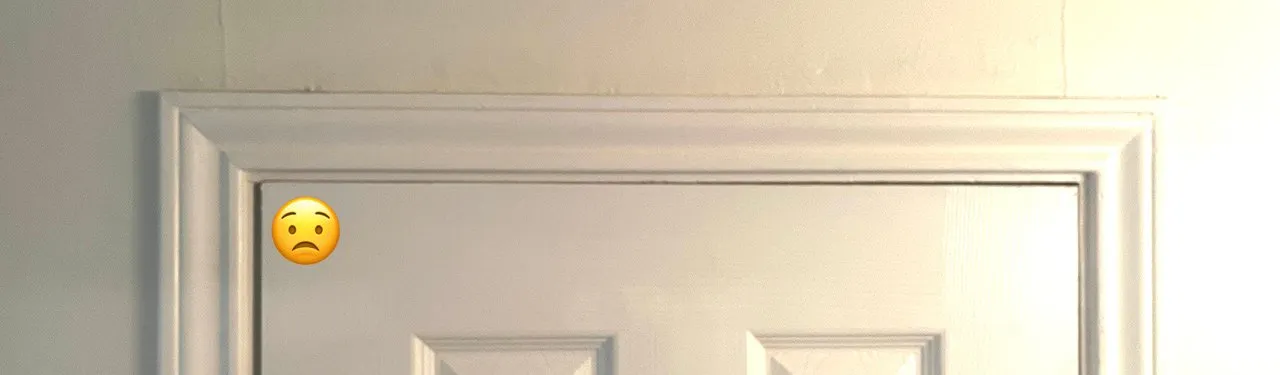

Your door used to open, close, and latch without a second thought. Now it drags, sticks, or won’t lock like it used to. The maddening part? You can’t tell whether the door itself is the problem . . . or whether something bigger is shifting under your whole house.

Our name says foundation repair, and that IS what we do best. But here’s a little secret . . . I often think of us as a stealth door repair company too. Cranky doors are one of the most common things homeowners call us about, and since 1985 we’ve gotten pretty darn good at fixing them AND at diagnosing WHY they act up.
So let’s sort it out. We’ll cover why a good door suddenly turns on you, how to tell a foundation problem from a plain hardware one, and what to do once you know which you’ve got.
Why Is My Door Suddenly Not Working Like It Used To?
If your door has started sticking, dragging, or ghosting open on its own, something about how it sits in its frame has changed. To understand what, you first need to know how a door is properly installed.
A properly installed door must satisfy three conditions at once: it has to be square, level, and plumb. Satisfy all three and the door glides. Violate even one and you’ve got the sticking, rubbing, and latching trouble you’re dealing with now.
- Square: Not the geometry-class kind (plus a door is a rectangle anyway!), but construction square: the two adjoining sides of the frame must meet at a true 90-degree angle. Done *right*, it produces a clean, even reveal (the gap between the door and the frame) all the way around.
- Level: The top of the frame must sit perfectly horizontal, which is harder than it sounds, since the floor beneath it is often poured slightly out of level. To compensate, a carpenter may trim one side of the frame more than the other. Plus, we’re not talking about the trim above the door (which can be placed level even when other things aren’t), we’re talking about the internal frame of the door that wraps around the door itself.
- Plumb: Similar concept to being level, but on the vertical: the sides of the frame must stand perfectly straight up and down. Miss plumb and the door will “ghost,” drifting open or swinging shut on its own, untouched.

The reassuring part about new construction is that a handful of wooden shims and some basic finish-carpentry skill make all three achievable, regardless of how the slab, framing, and drywall came together beforehand. To appreciate how exacting that shimming is, Family Handyman walks through the entire process step by step.
So when a door that once worked perfectly starts giving you grief, it means one or more of those conditions, square, level, or plumb, has failed or shifted since installation day. The only question that remains is WHAT caused the shift . . . the hardware itself, or the foundation settling underneath it.
How Can I Tell the Difference Between a Foundation Problem and a Hardware Problem?

Telling a foundation problem apart from a simple hardware problem on a door is easier than most homeowners expect, once you know where to look. The two leave distinctly different fingerprints, and your door frame is where the evidence surfaces. BTW, these are not actual fingerprints that you have to wash off your door surface . . . you can blame your sticky-fingered kids for that . . .
Signs It Is Your Foundation
Foundation trouble rarely travels alone. When your home settles, a cranky door is usually one member of a whole chorus of symptoms.

- It comes with company. You’ll often spot drywall cracks running off the corners of doors (even the same door you’re having trouble with) and windows, trim pulling away from the wall, or cracks and gaps showing up outside on the brick or foundation.
- It moves with the seasons. Foundation movement tends to begin slowly and come and go with the weather, worsening in dry spells and easing after rain. That seasonal rhythm reflects the expansive clay soil beneath your home swelling and shrinking, and over time the movement often turns permanent. Doors in particular are easily affected by this seasonal movement, sticking when it’s dry and improving when it rains.
- It pinches at the TOP. When the foundation is the cause, the door usually binds along the top of the frame, because the whole opening is slowly sinking out of square on one side or the other.
Signs It Is Just the Door Hardware

A pure hardware problem is a far more solitary affair. It appears by itself, with none of the supporting cast.
- It travels alone. A hardware issue almost never brings drywall cracks, trim separation, or exterior clues along with it.
- It is NEVER seasonal. Hardware trouble might creep in slowly as screws loosen or hinges wear, but it will not come and go with the weather. If the problem breathes with the seasons, it is not the hardware.
- It pinches on the SIDE. Hardware and framing issues tend to bind on the latch side of the door, the side opposite the hinges, rather than up top. You’ll start to see the reveal lessen and get narrower somewhere along the latch side. If it’s more advanced settlement, you begin to see a contact point where the door rubs or hits the side of the frame.
The Two Tells to Trust Most
If you remember nothing else, remember these two quick checks. They’re the same ones I run in the field, and this is where paying attention to your hinge hardware earns its keep.
First, look at the reveal, that gap between the door and the frame, and notice WHERE it has changed. If the gap has gone uneven across the TOP, lean toward foundation settlement issues. If it’s off along the SIDE, lean toward hardware malfunction.

Second, place a hand on the top of the door near the hinges and give it a firm push toward the hinge side. Does it feel loose or wobbly, with noticeable play? Loose hinge hardware up top points straight at a hardware fix. A door that feels solid and locked in place, yet still binds, points back toward the foundation.
Neither test requires a single tool, and together they’ll get you remarkably close to the right answer. Foundation problems show up on the TOP and bring friends. Hardware problems show up on the SIDE and travel alone . . . it can honestly be that clean.
How Do I Get This Door Fixed?

You want to get the door fixed, right? Duh, that’s why you’re likely reading this article! Once you know what’s actually behind your door trouble, the fix almost chooses itself. The trick is matching the repair to the root cause, not to the symptom.
If It Is the Foundation
If the door is a symptom of a settling foundation, then the door isn’t what needs fixing . . . the foundation is. Shaving, planing, or rehanging a door to chase a foundation problem is a losing battle: the soil keeps moving, the home keeps shifting, and you’ll soon be right back where you started. These quick fixes do work on a temporary basis, but know that it’s not addressing the heart of the matter
The right move is to correct the settlement itself, raising and stabilizing the home so the entire opening returns toward square. Do that, and many of those stubborn doors quietly start behaving again on their own. The best first step is a proper assessment so you know exactly what you’re facing before spending a dime on the door.
If It Is the Hardware

If your checks point to hardware, take a breath . . . this is the better outcome for your wallet. Hardware problems are usually the smaller, less expensive fix. Sometimes it’s as simple as tightening or replacing hinge screws, swapping in longer screws that bite deeper into the framing, or adjusting a hinge to nudge the door back into its reveal.
If you’re handy, a few of these are DIY-friendly. Hello internet video tutorials! If you’d rather hand it off, a good handyman or general contractor can handle most of them quickly. We’ll get into the specific hinge tricks of the trade in a future piece, so you can see exactly how we coax a stubborn door back into line.
Ready to Put a Name to That Door Problem?
You came in with a misbehaving door and no idea why. Now you know the three rules it was hung by, square, level, and plumb, plus two quick tells: where the reveal shifts (top versus side), and whether the hinge hardware feels loose up top.

That knowledge is worth a lot. We’ve spent 40+ years reading these signs on Brazos Valley homes, and the goal never changes . . . a door that works, and a homeowner who isn’t lying awake guessing why. If the trail leads to your foundation, that’s exactly what we’re built to fix.
The fastest way to confirm what you’re seeing is to match it against real photos of real homes with signs of foundation issues and other confusing symptoms you might find. We built a picture guide for each foundation type.
- If you have a slab home: start with our Ultimate Picture Guide to Foundation Problems (Real + Misleading Signs) to sort the real signs from the noise.
- If you have a crawl space home: head to Crawl Space Foundation Issues: 8 Real and 6 Misleading Signs for the pier-and-beam version.